

Smart IoT Connectivity
IoT without
the chaos.
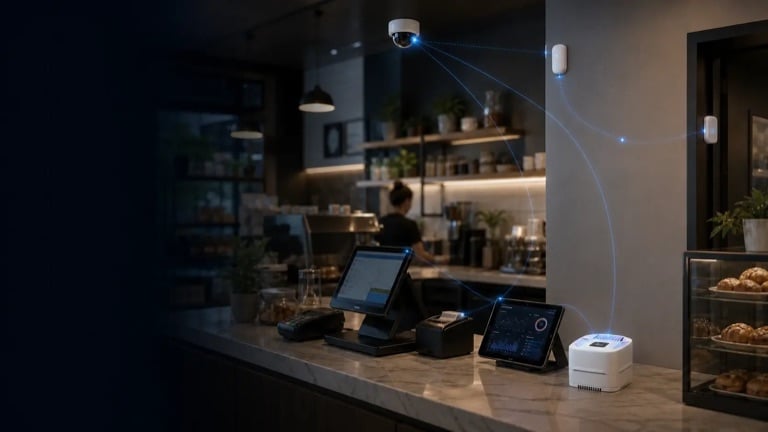
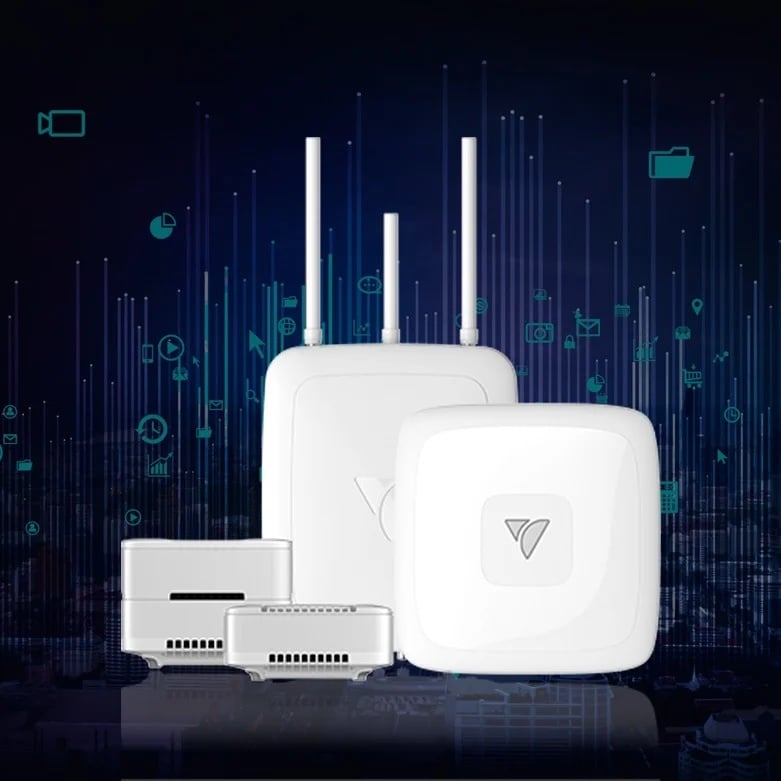
Zigbee, LoRaWAN, Wi-Fi, Bluetooth, Modbus, BACnet — one VeeaHub speaks all of them, acts on the data where it is made, and gives you a single interface instead of a shelf of vendor gateways.

Your thermostats speak Zigbee, your locks speak Bluetooth, your meters speak Modbus. Each one arrives with its own gateway, its own firmware cycle, its own cloud and its own console — so before anyone sees a single useful reading, someone has to make eleven things agree.
- Lighting
- HVAC
- Access
- Occupancy
- Cameras
- Meters
- Gateway
- Gateway
- Gateway
- Gateway
- Vendor cloud
- Vendor cloud
- Vendor cloud
- Lighting
- HVAC
- Access
- Occupancy
- Cameras
- Meters
- VeeaHub
- Your apps & your cloud
Range, speed and battery life trade against each other, and physics does not negotiate. LoRaWAN reaches a hundred kilometers because it barely sends anything; Wi-Fi moves a gigabit because it barely leaves the room. Plot Veea's own published figures and the radios tile the space almost without overlapping — which means a real building needs several of them, and that is not a procurement mistake.
Every one of these is the right answer somewhere. VeeaHub carries them all so the choice stays a design decision rather than a procurement commitment.
SpeaksDown to the devices
The VeeaHub IoT Gateway application is the radio layer and the translation layer at once, so a new device type is a configuration rather than a purchase.
- LoRa, Wi-Fi, Bluetooth LE, Zigbee, Z-Wave, Modbus, BACnet and Ethernet
- Two-way: asynchronous telemetry in, commands and control back out
- A hardware abstraction layer that discovers and manages devices for you
- vMesh between hubs, so coverage extends by adding a hub, not a trench
ServesUp to your applications
Everything above the radios is yours: run it locally as microservices on the hub, hand it to your cloud, or both.
- MQTT and HTTPS out — the two protocols your platform already expects
- Veea APIs, data brokers, a rules engine and AI/ML analytics on the hub
- Azure, AWS, Google Cloud, Siemens MindSphere, Niagara and Savant
- vTBA and Trust Domains isolating devices, apps and users from each other
-
Lighting, HVAC and access on one console Three subsystems that historically arrived as three vendors, three gateways and three dashboards, running against one hub per floor.
-
Machine data without a rip-and-replace Legacy controllers keep their wiring and their protocol; the hub reads them and puts the result on the same bus as everything modern.
-
Sensing past where the cabling stops Car parks, water, tanks and remote plant, on the one radio built to cross kilometers — gathered by the same hubs running the building.
-
Shop floor, stockroom and cold chain Refrigeration, footfall and stock sensing on one stack per store, reporting to the same platform across every site in the estate.
-
Yards and docks that report themselves Asset tags, dock status and environmental sensing across a site far bigger than any one indoor radio can cover.
-
Equipment and environment, continuously Roaming equipment, room conditions and access control — where the readings should be acted on locally and stay inside the building.
-
Sites nobody visits twice a week Pumping stations, substations and tunnels: long-range sensing where the alternative is sending someone to look.
-
Shared services across many units Metering, access and common-area plant, on the protocols residential devices already ship with.
-
Street furniture that answers back Parks, transit stops and civic infrastructure, instrumented without a cabling program for each one.
-
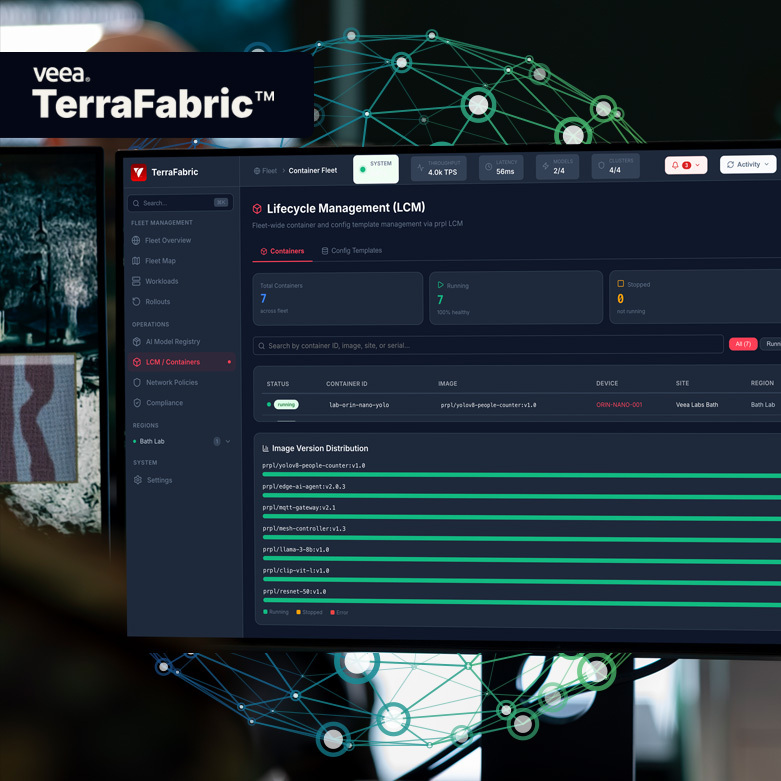
TerraFabric™
The control plane for governed autonomous systems at the edge.
Learn more -

SecureConnect™
Enterprise-grade cybersecurity, connectivity and intelligence — in one device.
Learn more -
AirLynx™
Broadband at home. Opportunity at the door.
Learn more -
MetaLynx™
Bridging ecosystems, transforming spaces with edge-intelligent automation.
Learn more