
Smart Construction
The alert arrives
before the machine does.
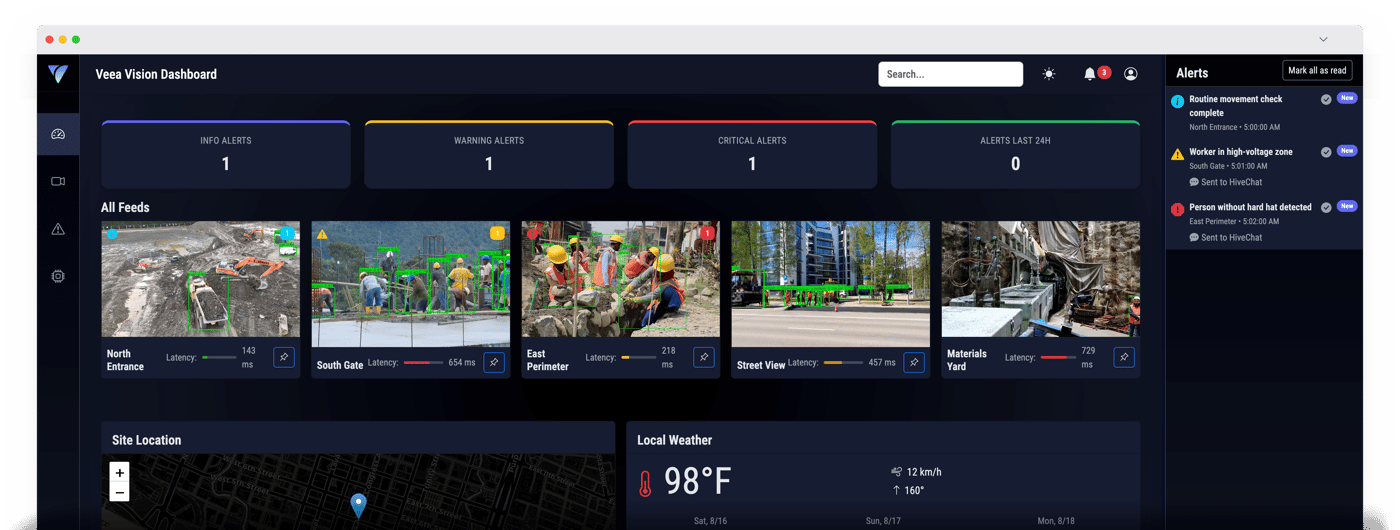
Cameras, AI models and the policy engine all run on the hubs that give your site its network — so a hard-hat breach or a person in a plant path becomes an alarm on site, in under 50 milliseconds, whether or not the site has working internet.
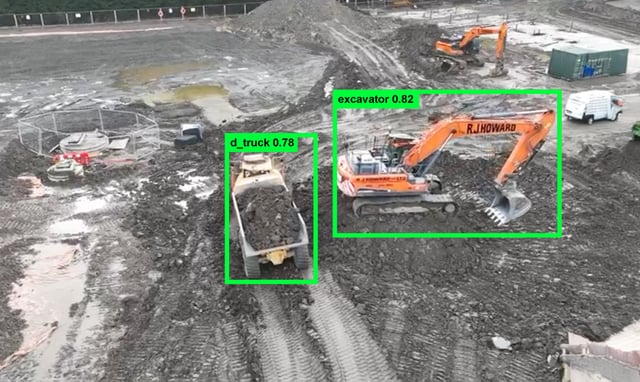
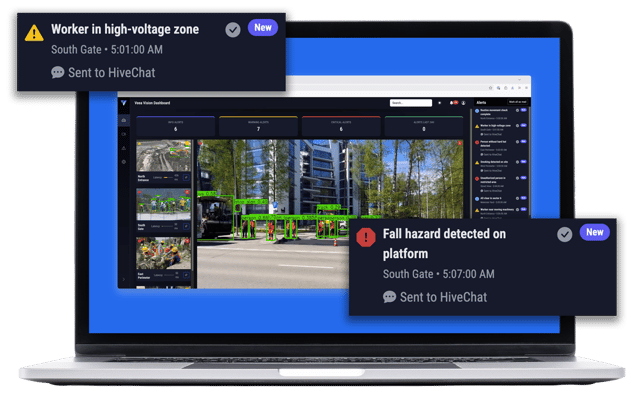
Connectivity on a jobsite is intermittent by nature: the uplink competes with plant, weather and a site that changes shape every week. A cloud-first stack answers a safety event at the speed of that uplink. An edge-native one answers at the speed of the node the camera is already plugged into.
Optional cloud backhaul is still there for cross-site reporting, orchestration and long-term retention. What changes is that nothing on the site waits for it.
One camera, one node, one zone. The frame is analyzed on the hub it is plugged into, the policy for that zone and that shift is applied there, and the alarm reaches the people in it — three hops that all sit inside the fence.
- Camera sees a person in the plant path
- The model and the zone policy run on this hub
- The zone is alerted — siren, radio, dashboard, operator
- Cloud is optional, and never in the loop
Under 50 ms
Temperature, humidity, smoke, 3D scanning, ultrasonic and pressure all arrive over whichever radio the device was built for, and land in the same local system as the video. Analysis, storage and the rules that act on them stay on site.
What reports
- Temperature
- Humidity
- Smoke
- 3D scanning
- Ultrasonic
- Pressure
- RTLS tags
- Cameras
How it arrives
- Bluetooth
- Wi-Fi
- LoRa
- ZigBee
- Z-Wave
- Ethernet / PoE
A site is rebuilt around you every few weeks — the excavation becomes a frame, the frame becomes rooms, and the hazards move with them. The hubs move too, and the policies and models follow them over the mesh.
Phase one
Substructure
Open ground, deep excavation, plant everywhere and almost no structure to mount to. Coverage follows the dig.
Phase two
Structure
A frame goes up and the site becomes vertical. Floors, edges and lifting zones are the hazards now.
Phase three
Fit-out
Enclosed, crowded with subcontractors, and full of tools and materials worth tracking. The same hubs, indoors.
The same hubs, moved — not re-bought. Policies and AI models replicate over the mesh, so a hub that moves floors arrives already knowing the rules.
Stays putData does not leave to be useful
Video, telemetry and RTLS streams are processed and stored within the VeeaHub mesh, so sensitive workforce and operational data never has to cross the site boundary.
ContainedOne compromised camera stays one camera
Each hub enforces micro-segmented policies that isolate connected devices and applications, so a compromised endpoint cannot reach the rest of the site.
WatchedEncrypted mesh, secure onboarding
Hub-to-hub communication is encrypted end to end, cameras, IoT devices and tags onboard securely, and AI-driven intrusion detection runs at the edge.
-
MetaLynx™
The platform Smart Construction runs on: every site its own region for compute, storage and networking.
Learn more -
SecureConnect™
Connectivity and cybersecurity as one managed service, on the same hub.
Learn more -
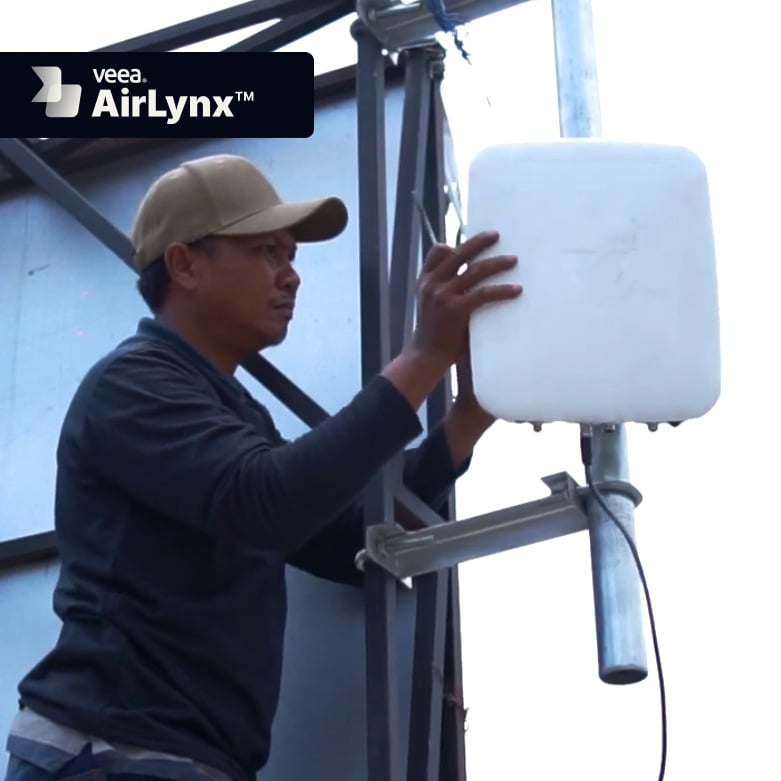
AirLynx™
Community-wide connectivity from whatever backhaul a region already has.
Learn more -
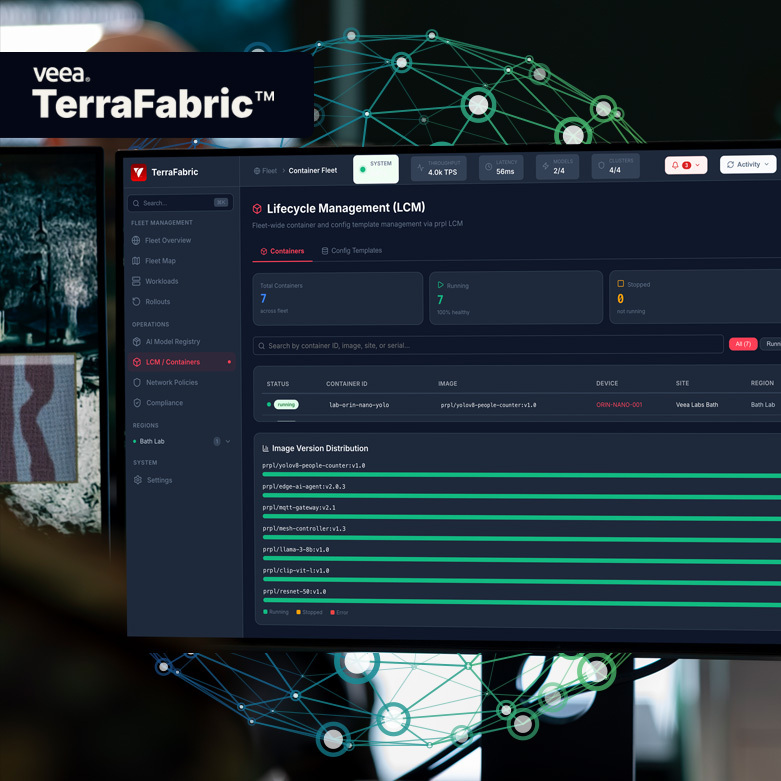
Smart IoT Connectivity
Every protocol that matters, on one hub, acting on the data where it is made.
Learn more