
Get started with Veea

Tell us about your sites and what you want to run on them, and a Veea team member will follow up.

Prefer the full page? Go to Contact.

Zero Gap AI Total Fabric · with Vapor IO

Your AI is fast.
The trip is not.

Inference runs on your own floor. Training bursts onto NVIDIA GPU pods one metro hop away. Private fiber and 5G join the two as a single fabric — so a workload is placed rather than shipped, and the public cloud goes back to being a choice.
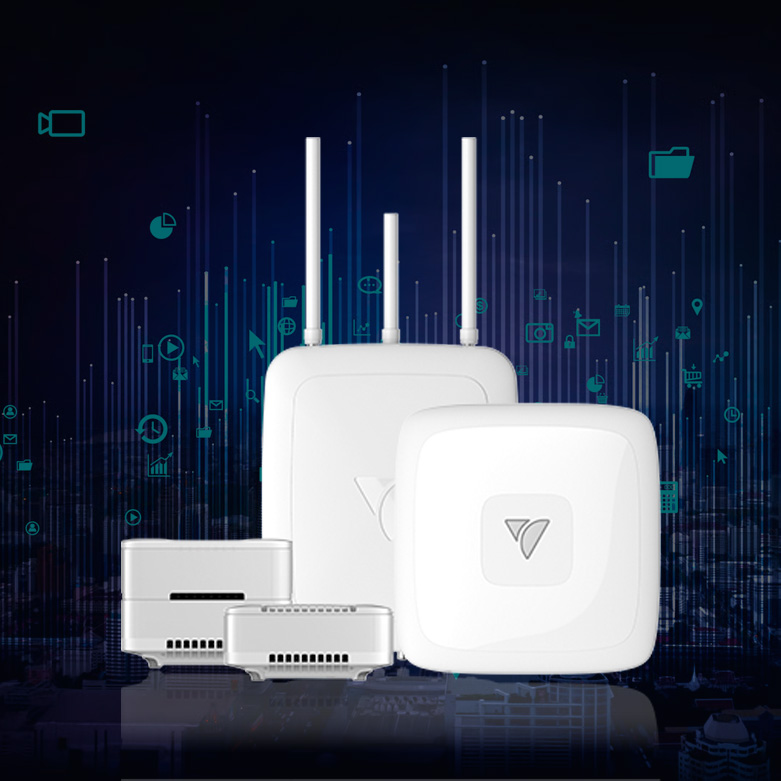
Four VeeaHub edge servers — two compact units, a flat indoor unit and an antenna-equipped outdoor unit — against a dark backdrop of app icons and light streaks above a city skyline
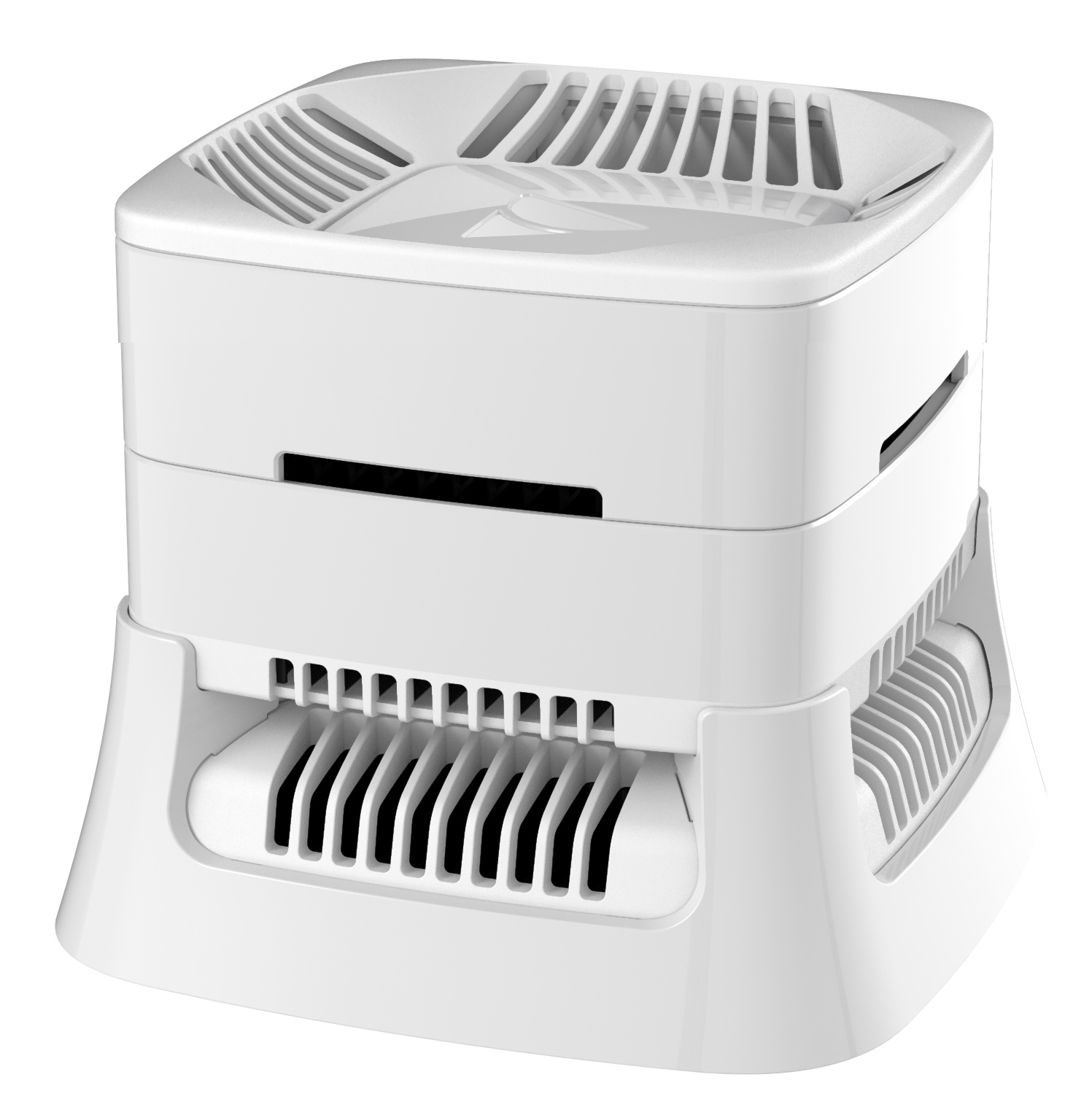
A VeeaHub STAX: two expansion modules stacked between the flared base and the vented top cap
  • Real-time inference
  • Model training
  • Federated learning
  • Machine vision
  • Video analytics
  • Digital twins
  • LLM serving
  • Predictive maintenance
  • Anomaly detection
  • Multi-modal AI
  • Robotics control
  • Quality inspection
  • NVIDIA H100
  • GH200
  • L40s
  • Bare metal
  • Kubernetes
  • Containers
  • Private 5G
  • Private fiber
  • Flat Layer 2
  • NVMe mesh
  • VeeaHub STAX
  • 36 metros
At a glance

Both tiers, one lane, no round trip

  • Inference on your floor

    Models execute on VeeaHub edge servers, beside the cameras and controllers feeding them.

  • GPUs one metro away

    NVIDIA H100, GH200 and L40s clusters in Vapor IO edge data centers across 36 metro areas.

  • One private lane

    Private fiber and 5G on a flat Layer 2 network. Workloads move without touching the public internet.

  • No egress bill

    Nothing is metered on the way out, and nothing lands in another region unless you send it there.

The false choice

Control or scale. Enterprises have been asked to pick one.

On-prem gives you control and strands you with it: every expansion is another capital cycle, every site its own island. Cloud gives you scale and charges you for the distance — in latency, in egress, and in where your data ends up living. Neither is wrong. Both are answers to a question about geography.

On-premises Yours, and stuck there Cloud & multi-cloud Elastic, and far away Total Fabric Both, on one lane
Data privacy and security Partial Partial
Observability end to end Partial Partial
Data stays where you put it Yes Partial
On-prem performance Yes No
AI at machine speed Yes No
No egress fees Yes No
Scales and bursts on demand No Yes
Fast hardware refresh No Yes
Low capital up front No Yes
Simple to operate No Yes
Network included No No
Integrated edge networking No No
How it works

A workload is placed, not shipped

Nothing here gets filed under “edge” or “cloud”. A job lands on the hub in your building or on a GPU pod one metro hop away, and it moves between the two across a private, flat Layer 2 network — without being rewritten, re-addressed or re-deployed.

Tier 1 · On-prem Your floor VeeaHub edge servers
  • Cameras
  • Controllers
  • Sensors
Inference in place
Private fiber & 5G Flat Layer 2 · one hop
Tier 2 · Near-prem Metro edge Vapor IO GPU pods H100 · GH200 · L40s · 36 metros
Public internet Many hops · metered on the way out
Optional Public cloud A destination, not a dependency Send what you choose

Tier 1On-prem AI

Workloads that cannot afford the trip, running on the VeeaONE Platform™ beside the machines producing the data.

  • Real-time inference on live video, sensor and machine data
  • Federated learning that trains without moving the training set
  • Containerized apps on VeeaHub mesh clusters — CPU, GPU, TPU or NPU
  • NVMe mesh storage, data lifecycle policy and a digital twin on site

Tier 2Near-prem AI

Workloads that outgrow the building, running on GPU clusters inside Vapor IO edge data centers — close enough to still be local.

  • NVIDIA H100, GH200 and L40s for training and multi-modal work
  • Large-model serving over an API, on bare metal, VMs or Kubernetes
  • Burst capacity across 36 metro areas without buying a rack
  • One private Layer 2 hop from your floor — never the public internet
The path of a workload

How a job finds its tier

  1. A job arrives

    Containerized and unchanged. It does not have to declare where it wants to run.

  2. The orchestrator scores it

    Latency budget, data locality, cost, and what capacity is actually free right now.

  3. It lands on a tier

    The hub in your building, or a GPU pod one metro hop away on private fiber.

  4. It moves when things change

    Demand spikes, a policy changes, hardware frees up — it relocates across flat Layer 2 with nothing to reconfigure.

The public cloud stays available as one more destination you can choose — rather than the default one you pay to escape.

Advantages

What changes when the distance goes

  • What you get Decisions on the timescale the machine actually operates on.
    The old way Every inference makes a round trip to a cloud region hundreds of miles away.
    With Total Fabric Inference runs on the VeeaHub in the building; training runs one metro hop away.
  • What you get Cost you can forecast — using the thing stops being the penalty.
    The old way Moving results out is metered, so the bill grows with how well the model works.
    With Total Fabric Traffic crosses your own private fiber and 5G, not a provider's egress meter.
  • What you get Capacity without a capital cycle, and a refresh someone else pays for.
    The old way Scaling means buying GPUs, racking them, and owning them through the next generation.
    With Total Fabric Burst onto H100, GH200 and L40s pods you never have to take delivery of.
  • What you get Sovereignty enforced by the architecture instead of by a policy document.
    The old way Sensitive data leaves your perimeter before anything useful has happened to it.
    With Total Fabric It is processed on your hardware, or in a metro you picked, on a private lane.
  • What you get One operation across every location, instead of one per location.
    The old way Every new site is another island, with its own stack and its own IT burden.
    With Total Fabric New sites join the same flat Layer 2 fabric and the same orchestrator.
In production

Where the distance was costing something

Where should your AI run?

Tell us what you are running and where the data lives. We will map it to a tier.